Health & Genetics
Understanding the breed. Respecting its complexity.
The Hungarian Vizsla is generally a healthy, athletic breed, but like every breed, it has inherited health risks that deserve our attention.
Understanding these risks is just as important as recognising the qualities we wish to preserve. Health screening provides valuable information, but not every condition can be tested for, and even carefully planned combinations carry uncertainty.
This page brings together current veterinary research, recognised screening programmes and the considerations that guide my approach to breeding at Descent of Elysium.
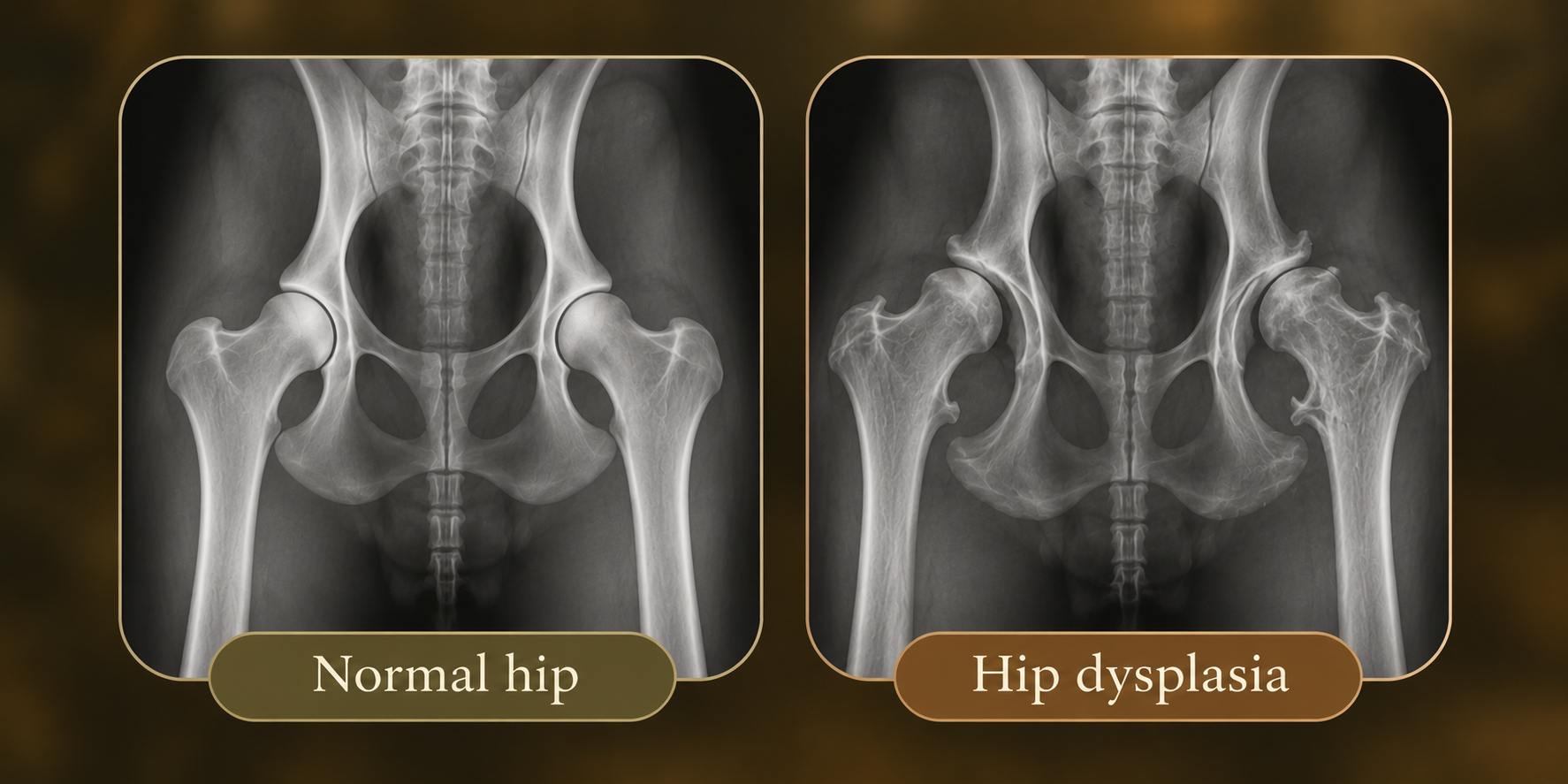
Hip Dysplasia (HD)
More than a single score.
Hip dysplasia (HD) is a developmental condition in which the hip joint does not form or develop normally. Depending on its severity, it can lead to joint instability, osteoarthritis, pain and reduced mobility.
HD is a complex, multifactorial condition influenced by both genetics and environmental factors. Its polygenic nature means that numerous genes contribute to a dog’s inherited predisposition, while factors such as growth rate, nutrition, body condition and exercise during development may influence how the condition ultimately manifests.
Because inheritance is not straightforward, even two dogs with excellent hip scores can produce offspring affected by hip dysplasia, while dogs with less favourable scores may produce offspring with healthy hips. This unpredictability makes HD difficult to eliminate entirely through selective breeding.
Although no breeding combination can guarantee unaffected offspring, careful selection based on individual hip scores, family history and the wider genetic background can help reduce the risk in future generations.
What can health testing tell us?
Official hip screening evaluates the appearance of the hip joints through radiographs. Several internationally recognised assessment systems exist, including FCI, BVA/KC, OFA and the Australian Hip Dysplasia Scheme.
The FCI provides standardised guidelines and a five-grade classification (A–E) used by participating national kennel clubs. However, other international schemes differ in their assessment criteria, scoring methods and classification of abnormalities. Differences in radiographic technique and interpretation may also influence results. Consequently, scores obtained under different systems cannot always be directly compared, and conversion tables should be treated as approximate guides rather than exact equivalents.
It is equally important to distinguish between radiographic findings and clinical symptoms. Some dogs with visible signs of hip dysplasia may remain free of clinical symptoms throughout their lives, while others with apparently healthy hips may experience pain or mobility problems, sometimes due to unrelated conditions.
A hip score therefore provides valuable information about joint structure, but does not necessarily reflect a dog’s everyday comfort, mobility or long-term quality of life. Nor can it predict the hip health of future offspring with certainty.
What matters in breeding
Under the Dutch Kennel Club’s breed-specific breeding requirements, official hip screening forms part of the health assessment for Hungarian Vizslas intended for pedigree breeding. However, an individual hip score is only one part of evaluating hereditary risk. Results from relatives across multiple generations can provide a more complete picture. [1]
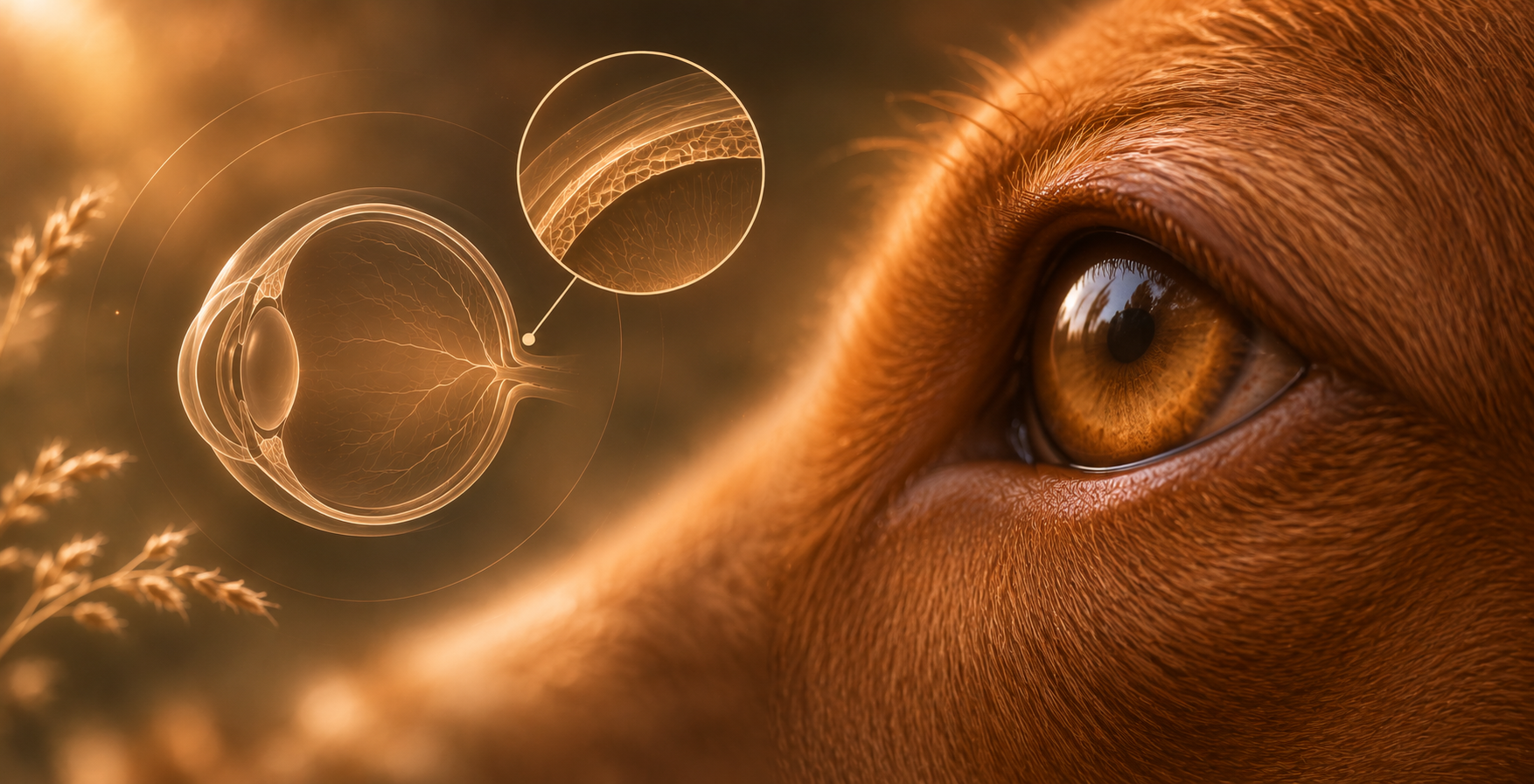
Eye Disorders
Ophthalmic Examinations & Preventive Screening
Eye health is an important consideration in the Hungarian Vizsla, as several hereditary or potentially hereditary eye conditions have been reported within the breed. These conditions vary considerably in their nature and severity. Some may have little or no effect on a dog’s quality of life, while others can progressively impair vision or, in more serious cases, lead to blindness.
Eye Examinations (ECVO)
In Europe, eye health can be assessed through examinations conducted under the European College of Veterinary Ophthalmologists (ECVO) scheme. Performed by qualified veterinary ophthalmologists, these examinations screen for a range of hereditary and presumed hereditary eye disorders, including abnormalities affecting the eyelids, lens and retina.
An additional examination, known as gonioscopy, assesses the iridocorneal angle, the structure through which fluid drains from the eye. Certain abnormalities of this drainage angle, including pectinate ligament abnormalities, may be associated with an increased risk of developing primary angle-closure glaucoma.
Glaucoma is a serious eye condition in which elevated pressure within the eye can damage the optic nerve and cause irreversible vision loss. However, the relationship between drainage angle abnormalities and glaucoma is not absolute. Not every dog with an abnormal gonioscopy result will develop the disease, and a normal result cannot exclude every possibility of future eye problems.
Screening and Breeding Considerations
Because some eye conditions develop or become detectable later in life, a clear examination at one point in time does not necessarily guarantee lifelong eye health. Regular screening therefore remains valuable throughout a breeding dog’s life.
Under ECVO recommendations, routine eye examinations are generally repeated annually, while gonioscopy is typically repeated every three years. Additional or different requirements may apply under national breeding regulations.
Eye examination results should always be interpreted in the context of the specific condition, its severity, the available scientific evidence and the dog’s family history. Not all abnormalities carry the same clinical or hereditary significance, and breeding recommendations may differ accordingly.
Although screening cannot eliminate every risk, it provides valuable information to support informed breeding decisions and helps breeders work towards preserving eye health in future generations.
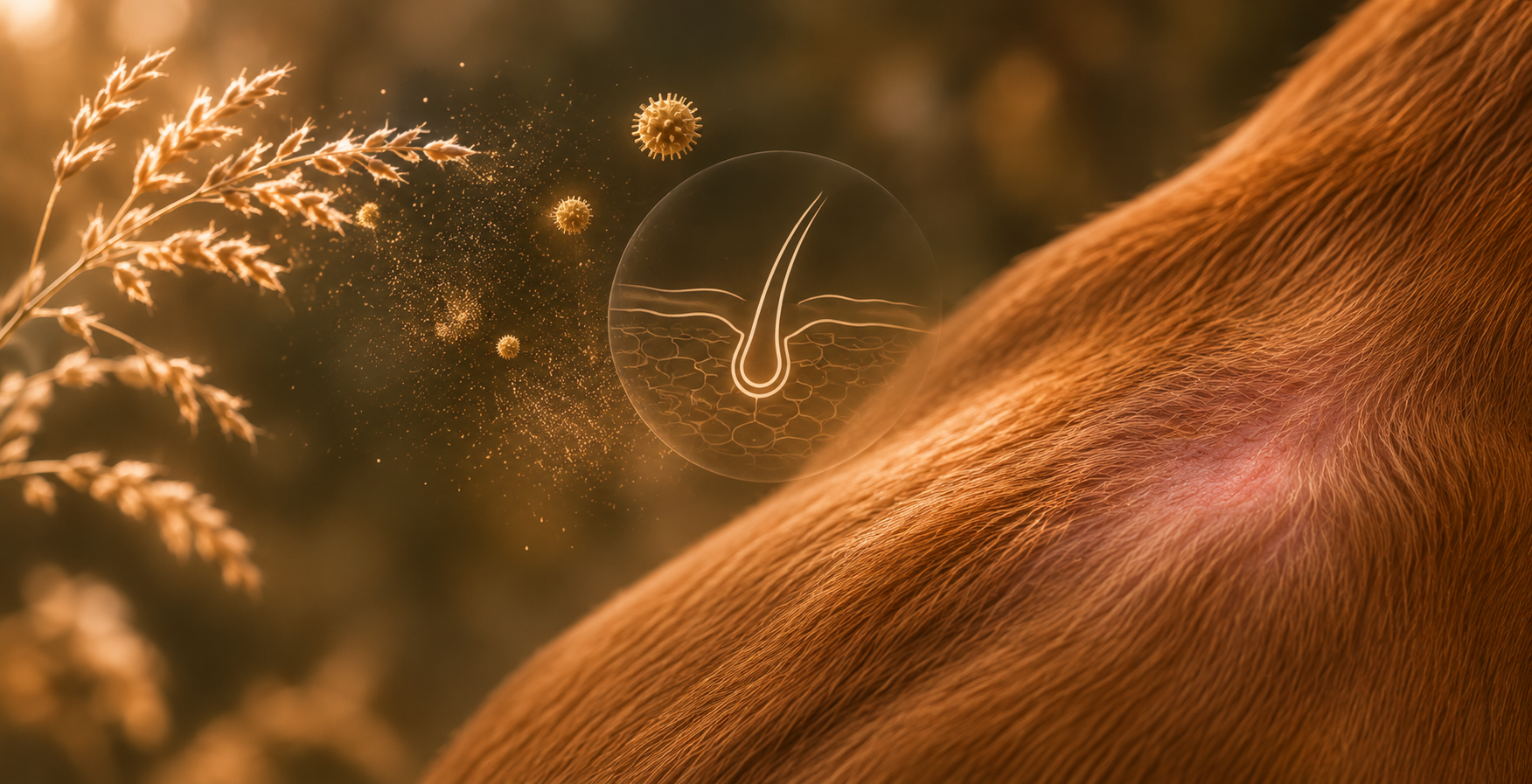
Allergies & Atopic Dermatitis
The interaction between genetics, immunity and environment.
The Hungarian Vizsla is known for its short, smooth coat without an undercoat and its characteristic floppy ears. While these features are part of the breed’s distinctive appearance, they also deserve consideration when it comes to everyday care. The thin coat offers relatively little insulation and protection from environmental conditions, while the shape of the ears can create a warm, less ventilated environment in which irritation and infections may develop.
Like many breeds, Hungarian Vizslas can experience skin sensitivities, ear problems and allergic conditions. One of these is canine atopic dermatitis, a chronic inflammatory skin disease commonly associated with itching, redness, recurrent ear inflammation and skin irritation.
Atopic dermatitis develops through a complex interaction between genetic predisposition, immune responses, skin barrier function and environmental influences. Common allergens include house dust mites, pollens and other environmental substances. Adverse food reactions may produce similar symptoms, although food-related allergies and environmental atopic dermatitis are distinct conditions.
Increasing attention is also being given to the relationship between the gut microbiome, immune regulation and skin health, often referred to as the gut–skin axis. Emerging research suggests that microbial communities may influence inflammatory responses, although their precise role in canine allergic disease remains an active area of investigation.
This growing understanding encourages a broader approach to health and well-being. Alongside appropriate veterinary care, balanced nutrition, maintaining a healthy body condition, supporting digestive health and providing a stable, enriching environment all contribute to a dog’s overall welfare. However, these measures should not be regarded as proven ways to prevent or cure allergic disease.
Are allergies inherited?
Research supports a genetic contribution to canine atopic dermatitis, although inheritance is complex and influenced by environmental factors. Recent veterinary reviews highlight the interaction between genetic susceptibility, immune responses and skin barrier function in the development of allergic disease.
There is currently no validated genetic test that can reliably predict whether an individual Hungarian Vizsla will develop environmental allergies. [4, 5]
What does it mean for breeding
The severity of allergic disease can vary considerably, from occasional mild symptoms to chronic itching, recurrent infections and a significant impact on quality of life.
When evaluating breeding combinations, the presence, severity and recurrence of allergic conditions within a family deserve consideration. Allergy testing may help identify relevant allergens in an individual dog, but it does not establish the genetic risk of future offspring.

Idiopathic Epilepsy
When the absence of symptoms does not mean the absence of risk.
Epilepsy is a neurological condition characterised by recurrent, unprovoked seizures.
Seizures can appear in different ways. While some involve loss of consciousness and pronounced muscle contractions, others may present as more subtle changes in behaviour, movement or awareness.
Idiopathic epilepsy is diagnosed when an underlying structural or metabolic cause cannot be identified and the clinical findings support the diagnosis.
What do we know about inheritance?
Scientific research has established that genetics play an important role in idiopathic epilepsy in dogs, although the underlying mechanisms differ between breeds.
An international review by the Veterinary Epilepsy Task Force (2015), examining evidence across multiple dog breeds, recognised the Hungarian Vizsla among breeds with a suspected hereditary predisposition.
Earlier research specifically involving Hungarian Vizslas found evidence of familial inheritance, with findings consistent with a possible autosomal recessive pattern. However, more complex inheritance involving multiple genes could not be excluded.
Despite advances in canine genetics, the precise genetic mechanisms underlying idiopathic epilepsy in Hungarian Vizslas remain incompletely understood. There is currently no validated DNA test that can reliably exclude the inherited risk of idiopathic epilepsy in the breed.
Why family history matters
Family history is particularly important when assessing hereditary risk. Even a clinically healthy dog may carry an unknown genetic predisposition, making information about parents, siblings, grandparents and previous offspring especially valuable. Age also matters: an older dog that has remained free of seizures provides more information about lifetime disease risk than a younger, unaffected dog. Nevertheless, the absence of known cases within a family cannot guarantee that future generations will remain unaffected.
What matters in breeding
No pedigree should be described as genetically guaranteed free from epilepsy without sufficient evidence. Honest reporting, long-term follow-up and thoughtful selection are among the most useful tools currently available. [2, 3]
Other Health Considerations
Beyond Routine Screening: Understanding the Bigger Picture
Beyond the conditions discussed above, other health concerns have been reported in Hungarian Vizslas, including certain immune-mediated diseases and cancers.
Examples include sebaceous adenitis, steroid-responsive meningitis-arteritis (SRMA), lymphoma and haemangiosarcoma. These conditions differ in their causes, clinical presentation and the extent to which inherited susceptibility is understood.
Not every reported condition is necessarily common within the breed, and reliable prevalence estimates are not always available. Nevertheless, information about affected relatives, longevity and causes of death can contribute to a more complete understanding of family health.
Long-term health monitoring remains valuable, particularly for conditions that may develop later in life and cannot currently be predicted through routine genetic screening. [8]

Genetic Diversity & Inbreeding
Why the bigger picture matters.
Every pedigree represents more than a collection of names. It reflects generations of breeding decisions, shared ancestors and inherited genetic variation.
The coefficient of inbreeding (COI) estimates the probability that two copies of a gene are identical by descent from a common ancestor.
Higher levels of inbreeding generally increase homozygosity, which can increase the likelihood that harmful recessive variants are inherited from both parents.
A large study published in 2021 examined genetic inbreeding across 227 dog breeds and found an association between higher inbreeding levels and increased veterinary care needs at breed level.
However, genetic diversity is not simply a matter of achieving the lowest possible COI.
Why COI is only part of the picture
Pedigree-based COI depends on the completeness and number of generations included in the calculation. Genomic measures of inbreeding use DNA information and may provide a different perspective.
Two dogs with a relatively low pedigree COI can still share disease-associated variants.
Equally, genetic diversity alone does not replace health screening, knowledge of inherited disorders or careful assessment of temperament and functional structure.
What matters in breeding
Preserving genetic diversity involves looking beyond the coefficient of inbreeding of an individual mating. The representation of particular ancestors, the repeated use of popular sires and the genetic contribution of each breeding combination to the wider population also deserve consideration.
A low COI alone does not guarantee a healthy litter or meaningful genetic diversity. Responsible breeding requires balancing genetic variation with health, temperament, working ability and functional structure. [6]
Beyond Health Testing
Breeding with knowledge, care and perspective.
Health testing is an important part of responsible breeding, but no single result can tell the whole story. While some inherited conditions can be identified through validated DNA tests, others require clinical screening, knowledge of family history and long-term observation.
At Descent of Elysium, I consider these different sources of information together, recognising both their value and their limitations.
My approach extends beyond health alone. Temperament, natural working ability, functional structure and genetic diversity are equally important in preserving the qualities that define the Hungarian Vizsla.
I believe responsible breeding also means remaining curious, listening to puppy owners and being willing to reconsider earlier assumptions as new information becomes available.
No dog or bloodline is without its strengths and limitations. What matters is understanding them as fully as possible and making thoughtful decisions with the knowledge available.
Ultimately, my aim is not to promise perfection, but to contribute positively to the health, character and future of the breed.
This page provides general educational information based on published veterinary research and breed health resources. It is not intended to replace individual veterinary advice. Research findings, screening recommendations and genetic knowledge may change as new evidence becomes available.
Scientific References
1. British Veterinary Association. (2024). Hip Dysplasia Scheme: Breed Specific Statistics 2024. View report. De BVA adviseert expliciet om ook heupresultaten van ouders, nestgenoten en nakomelingen te betrekken. British Veterinary Association
2. Patterson, E. E., et al. (2003). Clinical characteristics and inheritance of idiopathic epilepsy in Vizslas. Journal of Veterinary Internal Medicine, 17(3), 319–325. View study. PubMed
3. Hülsmeyer, V., et al. (2015). International Veterinary Epilepsy Task Force’s current understanding of idiopathic epilepsy of genetic or suspected genetic origin in purebred dogs. BMC Veterinary Research. Read publication. PubMed Central (PMC)
4. Hensel, P., et al. (2024). Update on the role of genetic factors, environmental factors and allergens in canine atopic dermatitis. Veterinary Dermatology, 35(1), 15–24. View review. PubMed
5. Gentry, C. M. (2025). Updates on the pathogenesis of canine and feline atopic dermatitis: Part 1, history, breed prevalence, genetics, allergens, and the environment. Veterinary Clinics of North America: Small Animal Practice, 55(2), 157–171. View review. PubMed
6. Bannasch, D., et al. (2021). The effect of inbreeding, body size and morphology on health in dog breeds. Canine Medicine and Genetics, 8, Article 12. Read study. Springer